Manuscript Preparation
To access the "Page Layout" in trans_jour.docx, go to the "View" menu in the menu bar and select it (View | Page Layout). Please note that these instructions are based on MS 6.0, and other versions may have different ways to access the same functionalities. Once you have selected the "Page Layout," you can type over sections of trans_jour.docx or cut and paste from another document. You can find the pull-down style menu on the left of the Formatting Toolbar at the top of your Word window to use markup styles. For instance, the style used in this document is "Text." Designate a particular style for a section, highlight it, and select the appropriate name from the style menu. The style will automatically adjust your fonts and line spacing. When creating a document, changing the font sizes and line spacing might be tempting to fit more text into fewer pages. However, it is essential to refrain from doing so as it can make the document difficult to read and unprofessional-looking. Instead, consider using italics for emphasis and avoiding underlining altogether. This will not only make the document easier to read but will also make it look more polished and well-crafted. To include images in Word, place the cursor where you want the image and use the Insert option. You can either select "Picture" and then choose "From File," or you can copy the image to the Windows clipboard and then select "Paste Special" and "Picture," making sure not to select "float over text." If you plan on submitting a paper to the SJAST journal, please remember that they will review the format. Also, it would be best to follow the 12-page limit for the original article and 16 pages for the review papers.
Users can easily use a pre-formatted layout for Microsoft Word or Latex. To prepare your manuscript, kindly download the "Word template" document or Latex template.
Title
When writing your paper title, combine uppercase and lowercase letters rather than all uppercase. Avoid using long formulas with subscripts in the title, but short formulas that identify elements are acceptable (for example, "Nd–Fe–B"). Do not include "Invited" in the title.
Author List and Affiliations
The authors' full names are preferred in the author field but are not required. Be sure to include a space between the authors' initials. Each author must provide detailed affiliation information as follows:
✔First A. Author1, Second B. Author2, and Third C. Author3
1Electrical and Electronics Department, Engineering and Computer Science College, Jazan University, Jazan, KSA
2Department of Physics, Science College, Ain Shams University, Egypt
3Chemechal Engineering Department, University of Colorado, Boulder, USA
Corresponding author: First A. Author (e-mail: author@ jazanu.edu.sa).
Abstract
Your abstract should provide a concise yet comprehensive overview of your article and be free of abbreviations, footnotes, or references. It must be self-contained and serve as a microcosm of the full article. Your abstract should be between 150 and 250 words, so stay within these limits. It should contain one paragraph, not mathematical equations or tabular material. You should include three or four keywords or phrases in your abstract to help readers find it. Finally, make sure your abstract reads well and is grammatically correct.
Keywords
Enter keywords or phrases in alphabetical order, separated by commas.
Introduction
The introduction should provide a concise study overview, highlighting its significance and purpose. It should include a thorough review of the current state of research in the field, referencing key publications. Additionally, the introduction should briefly outline the study's main objective and emphasize its primary conclusions. It is essential to ensure that the introduction is accessible to scientists who may not specialize in the specific topic of the paper.
Abbreviations And Acronyms
Whenever an abbreviation or acronym is used in the text for the first time, it should be defined, even if it has already been described in the abstract. Defining abbreviations such as SI, AC, and DC is unnecessary. Abbreviations with periods should not have spaces between them; instead of “C. N. R. S.,” write “C.N.R.S.” Avoid using abbreviations in the title unless necessary, such as in the case of "SJAST" in the title of this article.
Recommendations
When writing, it is recommended to use one space after periods and colons. It is advised to hyphenate complex modifiers, such as in "zero-field-cooled magnetization." Avoid using unclear dangling participles, like "Using (1), the potential was calculated." Instead, write, "The potential was calculated by using (1)," or "We calculated the potential using (1)."
Please ensure that you include a zero before decimal points; for instance, use "0.25" instead of ".25." Use "cm3" instead of "cc" to indicate volume. When indicating sample dimensions, use "0.1 cm × 0.2 cm" instead of "0.1 × 0.2 cm2". The correct abbreviation for "seconds" is "s," not "sec." Instead of "webers/m2," use "Wb/m2" or "webers per square meter" to express magnetic flux density. While expressing a range of values, use "7 to 9" or "7-9" instead of "7~9."
At the end of a sentence, a statement in parentheses has punctuation outside the closing parenthesis (like this). A sentence enclosed in parentheses is punctuated within the parentheses. In American English, quotation marks contain periods and commas, such as in "this period." Other punctuation goes outside of the quotes! Avoid using contractions; for example, instead of "don't," write "do not." The serial comma is preferred: use "A, B, and C" instead of "A, B and C."
You can write using first-person singular or plural and the active voice. For instance, you may say, "I observed that..." or "We observed that..." instead of "It was observed that...". Please make sure you check your spelling. If English is not your primary language, you should seek the assistance of a native English-speaking colleague to proofread your paper for accuracy and fluency. This is especially important to ensure your paper is easy to read and understand for your target audience. Authors are responsible for submitting their work in correct English and must use a language-editing service before publishing.
Math
You may use the Microsoft Equation Editor or the MathType add-on when creating equations in your paper using Word. To do so, navigate to Insert, Object, Create New, and select either Microsoft Equation or MathType Equation. Please ensure you do not select the "Float over text" option.
- Equations
Number equations consecutively and align the equation numbers with the right margin. Use the equation editor to create the equation and choose the "Equation" markup style. Incorporate the equation number in parentheses and use appropriate exponents to clarify the equation. Punctuate equations correctly when they are used as part of a sentence., as in
(1)
Italicize symbols and define them before they appear. Use “(1)” instead of “Eq. (1)” or “equation (1),” except at the beginning of a sentence.
- Units
Use either SI (MKS) or CGS as primary units. (SI units are strongly encouraged.) English units may be used as secondary units (in parentheses). This applies to papers in data storage. For example, write “15 Gb/cm2 (100 Gb/in2).” An exception is when English units are used as identifiers in trade, such as “3½-in disk drive.” Avoid combining SI and CGS units, such as current in amperes and magnetic field in oersted. This often leads to confusion because equations do not balance dimensionally. If you must use mixed units, clearly state the units for each quantity in an equation.
The SI unit for magnetic field strength H is A/m. However, if you wish to use units of T, refer to magnetic flux density B or magnetic field strength symbolized as µ0H. Use the center dot to separate compound units, e.g., “A·m2.”
Some Common Mistakes
The word “data” is plural, not singular. The subscript for the permeability of vacuum µ0 is zero, not a lowercase letter “o.” The term for residual magnetization is “remanence,” and the adjective is “remanent,” but do not write “remnance” or “remnant.” Use the word “micrometer” instead of “micron.” A graph within a graph is an “inset,” not an “insert.” The word “alternatively” is preferred to the word “alternately” (unless you mean something that alternates). Use the word “whereas” instead of “while” (unless you are referring to simultaneous events). Do not use the word “essentially” to mean “approximately” or “effectively.” Do not use “issue” as a euphemism for “problem.” When compositions are not specified, separate chemical symbols by en-dashes; for example, “NiMn” indicates the intermetallic compound Ni0.5Mn0.5, whereas “Ni–Mn” indicates an alloy of some composition NixMn1-x.
Remember the differences between homophones like "affect" and "effect," "complement" and "compliment," "discreet" and "discrete," and "principal" and "principle.". (e.g., “principle of measurement”). Do not confuse “imply” and “infer.”
Prefixes such as “non,” “sub,” “micro,” “multi,” and “ultra” are not independent words; they should be joined to the words they modify, usually without a hyphen. There is no period after the “et” in the Latin abbreviation “et al.” (it is also italicized). The abbreviation “i.e.” means “that is,” and the abbreviation “e.g.” means “for example” (these abbreviations are not italicized).
Guidelines for Graphics Preparation and Submission
Types Of Graphics
The classification of graphics in the SJAST journal is based on how they are constructed, as well as their utilization of color or shades of gray:
- Color/Grayscale figures
Color or shades of black/gray should be used for figures like photographs, illustrations, graphs, and flowcharts.
- Line Art figures
Figures consisting of only black lines and shapes, with no shades or half-tones of gray, only black and white.
- Tables
Data charts are visual representations of information typically presented in black and white. However, in some cases, color may highlight specific data points or make the chart more visually appealing. These charts can take various forms, such as bar graphs, line graphs, pie charts, and scatter plots, and are commonly used in business, science, and academia to help convey complex data clearly and concisely.
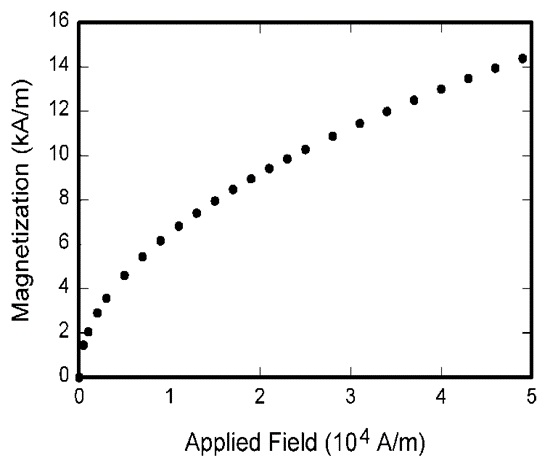
Figure 1. Magnetization as a function of the applied field. Note that “Fig.” is abbreviated. There is a period after the figure number, followed by two spaces.
Multipart Figures
Multipart figures, consisting of more than one sub-figure, are arranged side-by-side or stacked. If a multipart figure includes multiple figure types (one part is linear, and another is grayscale or color), it should comply with the stricter guidelines.
File Formats for Graphics
To ensure that your graphics are formatted and saved correctly, it's essential to use a graphics processing program suitable for the task. Such programs should be capable of creating images in a variety of file formats such as PostScript (PS), Encapsulated PostScript (EPS), Tagged Image File Format (TIFF), Portable Document Format (PDF), or Portable Network Graphics (PNG). Additionally, these programs should allow you to adjust the size and resolution settings of the images to meet your specific needs. By selecting the right graphics processing program and adequately configuring the settings, you can create high-quality graphics that are optimized for your intended use.
Submitting graphics in Microsoft Word, Microsoft PowerPoint, or Microsoft Excel source files without converting them to PS, EPS, TIFF, PDF, or PNG format is possible. However, saving these files in PDF format is strongly recommended instead of DOC, XLS, or PPT to avoid issues with standard font and arrow strokes when working on the files across multiple platforms. By doing so, you can protect your figures and ensure that they are presented correctly.

Vertical lines are optional in tables. Statements that serve as captions for the entire table do not need footnote letters.
For magnetostatics, Gaussian units are the same as cg emu; Mx = Maxwell, G = Gauss, Oe = Oersted; Wb = Weber, V = volt, s = second, T = Tesla, m = meter, A = Ampere, J = joule, kg = kilogram, H = Henry.
Charts, graphs, and tables are typically displayed in one of two sizes: one column wide, which measures 3.5 inches (88 millimeters or 21 picas), or page wide, which measures 7.16 inches (181 millimeters or 43 picas). The maximum allowable depth for any graphic is 8.5 inches (216 millimeters or 54 picas). When selecting the depth of a graphic, it is best to allow room for a caption. While it is possible to adjust the size of figures between column and page widths, it is only recommended to make them smaller than one column width if necessary.
One publication's column measurement does not coincide with those listed above. Proceedings of the SJAST have a column measurement of 3.25 inches (82.5 millimeters / 19.5 picas).
Resolution
The resolution required for your figures will vary depending on the type of figure, as specified in the “Types of Figures” section. Color and grayscale figures should be at least 300 dpi, and tables and line art should be at least 600 dpi.
Vector Art
We request that files be submitted in EPS, PDF, or PS formats to ensure the images remain consistent and unaltered when viewed on different computer systems. All fonts must be embedded or converted to outlines for the highest quality outcome.
Color Space
The amalgamation of colors represented within a medium is called color space. Three main color spaces are used in digital imaging: Grayscale, RGB (red/green/blue), and CMYK (cyan/magenta/yellow/black). RGB is commonly used for on-screen graphics, while CMYK is used for printing.
RGB or CMYK color space should be used to create all color figures, while Grayscale color space is recommended for grayscale images. Line art can be submitted in either grayscale or bitmap color space. However, it's important to note that the "bitmap colorspace" should not be confused with the "bitmap file format." When using bitmap colorspace, saving the file in TIF/.TIFF/.PNG format is recommended.
Accepted Fonts Within Figures
SJAST Journal recommends using Times New Roman, Helvetica, Arial, Cambria, and Symbol as open-type fonts for your graphics preparation. If you supply EPS, PS, or PDF files, embed all fonts. If some fonts are only native to your operating system and not embedded, you may encounter missing or distorted parts of the graphic.
When completing the figures, it is advisable to convert fonts into an "outline" type and eliminate them before saving the files. This transformation enables fonts to become graphics that display uniformly on any screen, ensuring a consistent appearance across all devices.
Using Labels Within Figures
Figure Axis labels
When labeling the figure axis, symbols are commonly used, which can often be confusing. Instead, using words and writing out the total quantity is recommended. For instance, instead of just using "M," write out "Magnetization" or "Magnetization M." Additionally, it's essential to include the units in parentheses instead of only labeling the axes with units. For example, instead of just writing "A/m," write "Magnetization (A/m)" or "Magnetization (Am−1)," as shown in Fig. 1. Lastly, avoid labeling axes with a ratio of quantities and units. Instead of writing "Temperature/K," write "Temperature (K)."
The use of multipliers can be perplexing. To avoid any confusion, it's best to use "Magnetization (kA/m)" or "Magnetization (103 A/m)" instead of "Magnetization (A/m) 1000". This is because readers may be unable to determine if the top axis label in Figure 1 corresponds to 16000 A/m or 0.016 A/m. It's essential to ensure that figure labels are easily readable, with a font size of approximately 8 to 10 points.
Subfigure Labels in Multipart Figures and Tables
Before submitting the final version, merging and captioning multipart figures is necessary. The captioning should comprise an 8-point Times New Roman font centered below each subfigure, using the format (a), (b), (c).
Referencing a Figure or Table Within Your Paper
When citing figures and tables in your paper, always use the abbreviation "Fig." even when it's the first word of a sentence. For tables, do not abbreviate and use Roman Numerals for numbering.
Conclusion
A conclusion section is essential. However, it should differ from the abstract, even though it may summarize the paper's main points. A conclusion can offer further details on the significance of the research or propose potential applications and extensions.
Submitting Your Paper
Please ensure your final version is printed in a two-column format, including figures and tables. You must also submit your final manuscript using a web submission system.
Please send all authors information containing complete contact information, including full mailing addresses, telephone numbers, and e-mail addresses. It is also important to designate one author as the "corresponding author," who will be responsible for receiving proofs of the paper. Keep in mind that proofs will only be sent to the corresponding author.
Appendix
Before the acknowledgment section, you should include any appendices that may be necessary.
Acknowledgment
In American English, the word "acknowledgment" is preferred without an "e" after the "g". Even if there are several acknowledgments, use the singular heading. Avoid phrases such as "One of us (S.B.A.) would like to thank...." Instead, use "F. A. The author thanks....". Typically, acknowledgments for financial and sponsor support are placed in the unnumbered footnote on the first page and not included here.
References and Footnotes
- References
It is essential to make sure you mention the sources in the text. However, when mentioned, they should be enclosed in square brackets and placed after the punctuation. If you cite a section from a book, provide the relevant page numbers. When referring to a source in the text, use the reference number only. Avoid using "Ref." or "reference" unless at the beginning of a sentence. For instance, "Reference [3] reveals..." Please avoid using automatic endnotes in Word; instead, create a reference list at the end of the paper using the "References" style.
The reference numbers should be placed on the left side, creating a separate column that extends beyond the reference body. Enclose the reference numbers in square brackets and put them on the same line. Abbreviate the first name of the author or editor and use only their initial before the last name. Use "et al." only when names are not available. Commas should be used to set off Jr., Sr., and III in names. Conference titles should be abbreviated. When referring to transaction papers, provide the issue number, page range, volume number, year, and month if available. When referencing a patent, include the day and month of issue or application. Ensure that you obtain and include all relevant information, as references may not include all necessary details. Do not combine references; ensure each number corresponds to only one reference. If a URL is included in the print reference, it can be added at the end.
Capitalization in paper titles should be limited to the first word unless it's a proper noun or an element symbol. If you're citing a paper published in a translation journal, please provide the English citation first, followed by the original foreign-language citation. Examples of standard references and formats can be as follows:
The basic format for books:
- K. Author, “Title of chapter in the book,” in His Published Book, xth ed. The City of Publisher (only U.S. State), Country: Abbrev. of Publisher, year, ch. x, sec. x, pp. xxx–xxx.
Examples:
- O. Young, “Synthetic structure of industrial plastics,” in Plastics, 2nd ed., vol. 3, J. Peters, Ed. New York, NY, USA: McGraw-Hill, 1964, pp. 15–64.
- -K. Chen, Linear Networks and Systems. Belmont, CA, USA: Wadsworth, 1993, pp. 123–135.
The basic format for periodicals:
- K. Author, “Name of paper,” Abbrev. Title of Periodical, vol. x, no. x, pp. xxx-xxx, Abbrev. Month, year, DOI. 10.1109.XXX.123456.
Examples:
- U. Duncombe, “Infrared navigation—Part I: A feasibility assessment,” IEEE Trans. Electron Devices, vol. ED-11, no. 1, pp. 34–39, Jan. 1959, 10.1109/TED.2016.2628402.
- P. Wigner, “Theory of traveling-wave optical laser,”
Phys. Rev.,
vol. 134, pp. A635–A646, Dec. 1965. - H. Miller, “A note on reflector arrays,” IEEE Trans. Antennas Propagat., to be published.
The basic format for reports:
- K. Author, “Title of report,” Abbrev. Name of Co., City of Co., Abbrev. State, Country, Rep. xxx, year.
Examples:
- E. Reber, R. L. Michell, and C. J. Carter, “Oxygen absorption in the earth’s atmosphere,” Aerospace Corp., Los Angeles, CA, USA, Tech. Rep. TR-0200 (4230-46)-3, Nov. 1988.
- H. Davis and J. R. Cogdell, “Calibration program for the 16-foot antenna,” Elect. Eng. Res. Lab., Univ. Texas, Austin, TX, USA, Tech. Memo. NGL-006-69-3, Nov. 15, 1987.
The basic format for handbooks:
Name of Manual/Handbook, x ed., Abbrev. Name of Co., City of Co., Abbrev. State, Country, year, pp. xxx-xxx.
Examples:
- Transmission Systems for Communications, 3rd ed., Western Electric Co., Winston-Salem, NC, USA, 1985, pp. 44–60.
- Motorola Semiconductor Data Manual, Motorola Semiconductor Products Inc., Phoenix, AZ, USA, 1989.
The basic format for books (when available online):
- K. Author, “Title of chapter in the book,” in Title of Published Book, xth ed. City of Publisher, State, Country: Abbrev. of Publisher, year, ch.x, sec. x, pp. xxx–xxx. [Online]. Available: http://www.web.com
Examples:
- O. Young, “Synthetic structure of industrial plastics,” in Plastics, vol. 3, Polymers of Hexadromicon, J. Peters, Ed., 2nd ed. New York, NY, USA: McGraw-Hill, 1964, pp. 15-64. [Online]. Available: http://www.bookref.com.
- The Founders’ Constitution, Philip B. Kurland and Ralph Lerner, eds., Chicago, IL, USA: Univ. Chicago Press, 1987. [Online]. Available: http://press-pubs.uchicago.edu/founders/
- The Terahertz Wave eBook. ZOmega Terahertz Corp., 2014. [Online]. Available: http://dl.z- thz.com/eBook/zomega_ebook_pdf_1206_sr.pdf. Accessed on: May 19, 2014.
- Philip B. Kurland and Ralph Lerner, eds., The Founders’ Constitution. Chicago, IL, USA: Univ. of Chicago Press, 1987, Accessed on: Feb. 28, 2010, [Online] Available: http://press-pubs.uchicago.edu/founders/
The basic format for journals (when available online):
- K. Author, “Name of paper,” Abbrev. Title of Periodical, vol. x, no. x, pp. xxx-xxx, Abbrev. Month, year. Accessed on: Month, Day, year, DOI: 10.1109.XXX.123456, [Online].
Examples:
- S. Turner, “New directions in communications,” IEEE J. Sel. Areas Commun., vol. 13, no. 1, pp. 11-23, Jan. 1995.
- P. Risk, G. S. Kino, and H. J. Shaw, “Fiber-optic frequency shifter using a surface acoustic wave incident at an oblique angle,” Opt. Lett., vol. 11, no. 2, pp. 115–117, Feb. 1986.
- Kopyt et al., “Electric properties of graphene-based conductive layers from DC up to terahertz range,” IEEE THz Sci. Technol., to be published. DOI: 10.1109/TTHZ.2016.2544142.
The Basic format for papers presented at conferences (when available online):
J.K. Author. (year, month). Title. Presented at abbrev. Conference title. [Type of Medium]. Available: site/path/file
Example:
- PROCESS Corporation, Boston, MA, USA. Intranets: Internet technologies deployed behind the firewall for corporate productivity. Presented at INET96 Annual Meeting. [Online]. Available: http://home.process.com/Intranets/wp2.htp
The Basic format for reports and handbooks (when available online):
- K. Author. “Title of report,” Company. City, State, Country. Rep. no., (optional: vol./issue), Date. [Online] Available: site/path/file
Examples:
- J. Hijmans and J. van Etten, “Raster: Geographic analysis and modeling with raster data,” R Package Version 2.0-12, Jan. 12, 2012. [Online]. Available: http://CRAN.R-project.org/package=raster
- Lytera UG, Kirchhain, Germany [Online]. Available: http://www.lytera.de/Terahertz_THz_Spectroscopy.php?id=home, Accessed on: Jun. 5, 2014
The Basic format for computer programs and electronic documents (when available online):
Legislative body. Number of Congress, Session. (year, month, day). Number of bills or resolutions, Title. [Type of medium]. Available: site/path/file
NOTE: ISO recommends that capitalization follow the accepted practice for the language or script in which the information is given.
Example:
- S. House. 102nd Congress, 1st Session. (1991, Jan. 11). H. Con. Res. 1, Sense of the Congress on Approval of Military Action. [Online]. Available: LEXIS Library: GENFED File: BILLS
The basic format for patents (when available online):
Name of the invention, by inventor’s name. (year, month, day). Patent Number [Type of medium]. Available: site/path/file
Example:
- Musical toothbrush with mirror, by L.M.R. Brooks. (1992, May 19). Patent D 326 189
[Online]. Available: NEXIS Library: LEXPAT File: DES
The Basic format for conference proceedings (published):
- K. Author, “Title of paper,” in Abbreviated Name of Conf., The City of Conf., Abbrev. State (if given), Country, year, pp. xxxxxx.
Example:
- B. Payne and J. R. Stern, “Wavelength-switched pas- sively coupled single-mode optical network,” in Proc. IOOC-ECOC, Boston, MA, USA, 1985,
pp. 585–590.
Example for papers presented at conferences (unpublished):
- Ebehard and E. Voges, “Digital single sideband detection for interferometric sensors,” presented at the 2nd Int. Conf. Optical Fiber Sensors, Stuttgart, Germany, Jan. 2-5, 1984.
The basic format for patents:
- K. Author, “Title of patent,” U.S. Patent x xxx xxx, Abbrev. Month, day, year.
Example:
- Brandli and M. Dick, “Alternating current fed power supply,” U.S. Patent 4 084 217, Nov. 4, 1978.
Basic format for theses (M.S.) and dissertations (Ph.D.):
- a) J. K. Author, “Title of thesis,” M.S. thesis, Abbrev. Dept., Abbrev. Univ., City of Univ., Abbrev. State, year.
- b) J. K. Author, “Title of dissertation,” Ph.D. dissertation, Abbrev. Dept., Abbrev. Univ., City of Univ., Abbrev. State, year.
Examples:
- O. Williams, “Narrow-band analyzer,” Ph.D. dissertation, Dept. Elect. Eng., Harvard Univ., Cambridge, MA, USA, 1993.
- Kawasaki, “Parametric study of thermal and chemical nonequilibrium nozzle flow,” M.S. thesis, Dept. Electron. Eng., Osaka Univ., Osaka, Japan, 1993.
The basic format for the most common types of unpublished references:
- a) J. K. Author, private communication, Abbrev. Month, year.
- b) J. K. Author, “Title of paper,” unpublished.
- c) J. K. Author, “Title of paper,” to be published.
Examples:
- Harrison, private communication, May 1995.
- Smith, “An approach to graphs of linear forms,” unpublished.
- Brahms, “Representation error for real numbers in binary computer arithmetic,” IEEE Computer Group Repository, Paper R-67-85.
The Basic formats for standards:
- a) Title of Standard, Standard number, date.
- b) Title of Standard, Standard number, corporate author, location, and date.
Examples:
- IEEE Criteria for Class IE Electric Systems, IEEE Standard 308, 1969.
- Letter Symbols for Quantities, ANSI Standard Y10.5-1968.
Article number in reference examples:
- Fardel, M. Nagel, F. Nuesch, T. Lippert, and A. Wokaun, “Fabrication of organic light emitting diode pixels by laser-assisted forward transfer,” Appl. Phys. Lett., vol. 91, no. 6, Aug. 2007, Art. no. 061103.
- Zhang and N. Tansu, “Optical gain and laser characteristics of InGaN quantum wells on ternary InGaN substrates,” IEEE Photon. J., vol. 5, no. 2, Apr. 2013, Art. no. 2600111.
Example when using et al.:
- Azodolmolky et al., Experimental demonstration of an impairment aware network planning and operation tool for transparent/translucent optical networks,” J. Lightw. Technol., vol. 29, no. 4, pp. 439–448, Sep. 2011.
Publication Principles
Authors should take into account the following aspects:
- Technical papers intended for publication must contribute to the improvement of existing knowledge and should reference related previous research.
- The submitted paper's length should be proportional to the significance or complexity of the work. If the work is an extension of previously published research, it may not be suitable for publication or be adequately covered in a few pages.
- The submitted paper's length should be proportional to the significance or complexity of the work. If the work is an extension of previously published research, it may not be suitable for publication or be adequately covered in a few pages.
- To ensure progress in scientific research, publications must contain adequate information for readers to replicate experiments or calculations and reproduce results. Authors must provide some details but disclose new and relevant information with complete descriptions. For instance, if a paper primarily introduces a new measurement technique, the chemical composition of a specimen need not be included. However, reviewers may question the validity of results if essential data and crucial details are not supplied.
- Although papers that announce the latest technical achievement or describe ongoing work may be suitable for presentation at a professional conference, they may need to meet the criteria for publication in specific contexts. While conference presentations focus on sharing preliminary findings and ongoing research, the standards for publication in academic journals or other formal outlets often require a more comprehensive and finalized body of work.
SJAST Publishing Policy
To submit an article to the SJAST journal, it is vital to ensure that the content is entirely original and has not been published elsewhere or is currently under review. Authors must explicitly indicate any prior publications or current submissions related to the submitted work. Also, obtaining consent from all co-authors, employers, or sponsors involved in the research or publication process is essential. Courtesy authorship should be discouraged, and all relevant prior work should be cited appropriately.
Furthermore, authors are advised to avoid submitting articles with preliminary data or results that lack comprehensive analysis and validation. The SJAST journal welcomes articles related to conferences that have undergone rigorous peer review. For every article submitted for peer review, the journal requires two comprehensive reviews to ensure the quality and validity of the content.
Funding
Please ensure that all sources of funding for the study are fully disclosed. It is essential to indicate any grants to support the research work and funds to cover publication costs. It's worth noting that some funders may only refund article processing charges (APC) if the funder and grant number are clearly and correctly identified in the paper. Authors can enter funding information separately into the submission system when submitting their manuscripts. Please make sure to include the following statement in this section: “This research received no external funding,” “This research was funded by [name of funder] grant number [xxx],” and “The APC was funded by [XXX].”
Informed Consent Statement
Please ensure that any research article describing a study involving humans includes the statement: "Informed consent was obtained from all subjects involved in the study." If patient consent was waived, provide a detailed justification. For studies not involving humans, please use "Not applicable." If the study did not include humans, you may exclude this statement. Also, written informed consent for publication must be obtained from participating patients who can be identified. If applicable, please state: "Written informed consent has been obtained from the patient(s) to publish this paper."
Data Availability Statement
This section provides details about the location of the data supporting reported results, including links to publicly archived datasets that were analyzed or generated during the study.
Conflicts of Interest
Authors must openly disclose any personal circumstances or interests that could influence the representation or interpretation of reported research results. If authors have no conflicts of interest, they should explicitly state, "The authors declare no conflict of interest." Furthermore, this section must explicitly declare any involvement of funding sponsors in the research project, study design, data collection, analysis, interpretation, manuscript writing, or decision to publish the results.